Big feelings are not the problem. Not knowing what to do with them is. Emotional regulation activities give your child the tools to handle anger, worry, and frustration before those feelings take over. If you want a daily plan to go with them, The Hero Mind Handbook is a 30-day guide to raising emotionally resilient kids.
Here is the trick most lists skip: you build this skill when your child is calm, not mid-meltdown. Below are 15 activities that actually work, sorted by age, plus a calm-down kit and the ones to skip.
What are emotional regulation activities for kids?
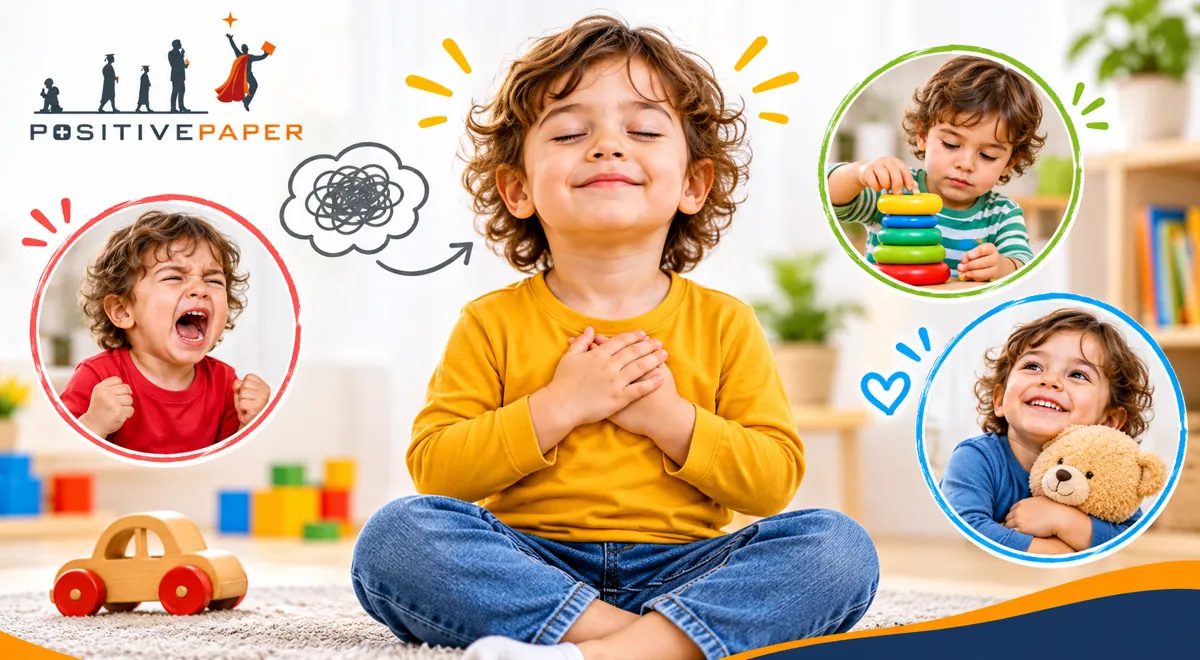
Emotional regulation activities are simple exercises that help a child notice, name, and manage big feelings. The best ones work on the body first, because an upset child cannot think their way calm. Practised often, they turn into skills your child can reach for alone.
The one rule: practise when calm
This makes or breaks every activity below. Teach the tools when your child is relaxed. A brand-new tool will not work for the first time during a tantrum. Think of it like a fire drill. You practise when there is no fire, so the steps are automatic when there is one.
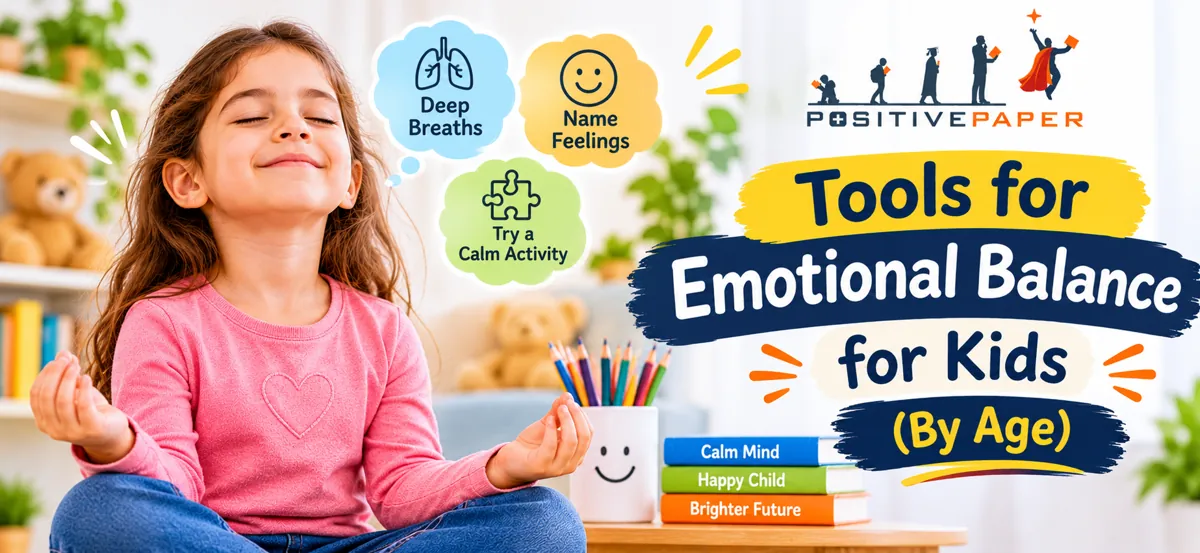
Emotional regulation activities by age
Toddlers (1 to 3)
- Name it. “You are so mad.” Short words, calm face.
- Belly breaths. Lay a soft toy on their tummy and watch it rise and fall.
- Big squeeze. A firm hug or gentle rocking settles the body.
- Lend your calm. Toddlers cannot self-soothe yet. They borrow yours.
Preschoolers (3 to 5)
- Flower and candle breathing. Smell the flower, blow out the candle.
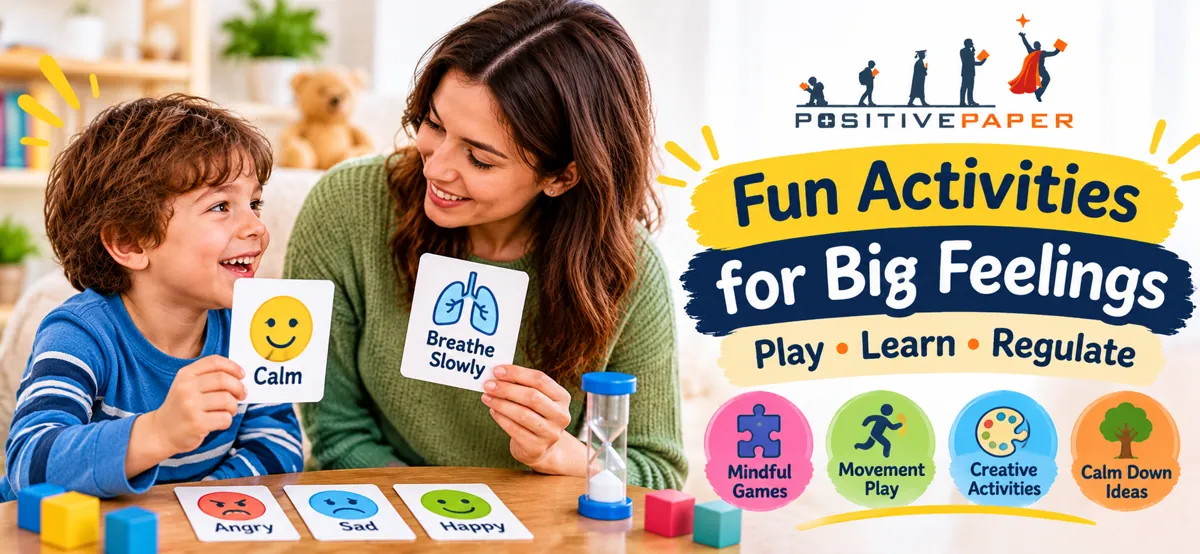
- Feelings faces. Take turns making and guessing emotions.
- Bubble breaths. Blowing real bubbles slows the breath automatically.
- Calm-down corner. A cosy reset spot with soft things.
School-age kids (6 and up)
- 5-4-3-2-1 grounding. Name five things you see, four you hear, and so on.
- Name the zone. Borrowing from the Zones of Regulation, help them spot their zone and pick a tool.
- Draw or journal it out. Getting a feeling onto paper shrinks it.
- Feelings thermometer. Rate how big the feeling is from 1 to 10.
Body-based activities that reset big feelings fast
When feelings run high, the body needs an outlet before the brain can settle. These work quickly.
- Heavy work. Push a wall, carry a heavy basket, do animal walks. Deep pressure calms the nervous system. It is the most underused tool there is.
- Long exhales. Breathe out longer than you breathe in. It flips the body into calm.
- Cold or sensory input. A cup of cold water, kinetic sand, or a glitter jar gives the brain something steady to hold.
- Movement. Jumping, dancing, or a quick run burns off the stress charge.
Build a calm-down kit
A calm-down kit keeps the tools in one place your child can grab. Keep it simple: a squishy ball, a glitter calm-down jar, a feelings chart, a favourite book, and headphones for noise.
Let your child help build it. It works better when it feels like theirs. Store it in a cosy calm-down corner, framed as a reset spot, never a punishment.
Teach the words: name it to tame it
A child who can say “I am frustrated” does not need to throw the toy to show it. Build emotional vocabulary on ordinary days, not just hard ones.
- Label feelings out loud, yours and theirs.
- Point out how characters feel in books and shows.
- Use a feelings wheel or emotion cards at dinner.
Putting a word to a feeling calms the brain’s alarm system. The Child Mind Institute explains why in its guide on helping kids with self-regulation.
What to skip
- “Calm down” as a command. It tells a child the feeling is wrong. Swap it for the lines in what to say instead of “calm down”.
- Teaching mid-meltdown. Connect now, teach later.
- Punishing the feeling. Limit the behaviour, not the emotion.
- Expecting it to work the first time. These are skills. They take dozens of calm reps.
Where to go next
These activities build the skill over time. To calm a meltdown in the moment, see calm down strategies for kids. To make it playful, try these emotional regulation games for kids. For the full picture, start with our guide to emotional regulation in kids, and try these positive affirmations for kids for kinder self-talk.
To raise a child who bounces back from big feelings, our Raise an Unstoppable Child ebook gives you a 30-day plan, and 21 Days to Calmer Parenting helps you stay the calm they borrow. Browse all our Ebooks for Parents.
This article is general parenting guidance, not medical advice. If your child’s struggles are intense or affecting daily life, speak with your doctor.
Frequently asked questions
What activities help a child regulate emotions?
Body-based tools work best: long exhales, heavy work, movement, cold or sensory input, and grounding games like 5-4-3-2-1. Pair them with naming feelings out loud. Practise them when your child is calm so they are ready when big feelings hit.
How do I practise emotional regulation with my child?
Teach one tool at a time during calm moments, model it yourself, and keep it playful. Build a calm-down kit together, name feelings on ordinary days, and praise your child when they use a tool, even imperfectly.
What is the 5-4-3-2-1 technique?
It is a grounding game where your child names five things they can see, four they can hear, three they can touch, two they can smell, and one they can taste. It pulls attention out of a spiral and back into the room.
At what age can kids learn emotional regulation?
It develops gradually. Toddlers rely on your calm, preschoolers start simple breathing and feeling words, and school-age children can use strategies more independently. Every child moves at their own pace, so match the activity to the stage.



 20Oct
 by