Your child is in floods of tears because their biscuit broke in half. Your instinct is probably one of two things: fix it (“here, have a new one”) or dismiss it (“it’s just a biscuit, stop crying”). Emotion coaching parenting offers a third way, one that research links to calmer, more resilient, more emotionally capable kids. And it does not take longer than the fixing or the dismissing. It just takes a different first move.
Here is what emotion coaching is, the five steps, and exactly what it sounds like in real life.
Because emotion coaching only works when you are calm enough to lead, our 21 Days to Calmer Parenting ebook helps you build that steadiness first.
What is emotion coaching parenting?
Emotion coaching is an approach, developed by psychologist Dr. John Gottman, where you treat your child’s emotions, including the inconvenient ones, as opportunities for connection and teaching rather than problems to shut down. Instead of rushing to stop the feeling, you help your child understand it, name it, and move through it, while still holding limits on behaviour. The core belief is simple: all feelings are acceptable, even if all behaviours are not. You can read more from The Gottman Institute’s work on emotion coaching, which is where the method comes from.
Emotion coaching vs dismissing feelings
Gottman’s research found parents tend to respond to children’s emotions in a few broad ways. Some dismiss feelings (“you’re fine, don’t be silly”), some disapprove of them (“stop being a baby”), and some are laissez-faire, accepting all feelings but offering no guidance or limits. Emotion coaching is the fourth path: accepting the feeling, offering empathy, and guiding the behaviour. Dismissing and disapproving teach kids that their emotions are wrong or unsafe to show. Emotion coaching teaches them that feelings are normal and manageable, which is the foundation of lifelong emotional regulation.
The 5 steps of emotion coaching (with examples)
Think of these as a sequence you can lean on in the moment.
Step 1: Notice the emotion, even the small ones
Tune in to your child’s feelings before they boil over, including the quiet ones. A tense body or a wobbling lip is your cue. Noticing early is what makes everything after it easier. Example: you spot your son going quiet and stiff as his tower wobbles, before it falls.
Step 2: See it as a chance to connect and teach
Reframe the big feeling from a nuisance into an opening. This is the mindset shift that powers the whole approach. A meltdown is not an interruption to parenting. It is parenting. Example: instead of “oh no, here we go,” you think “okay, this is a moment to help.”
Step 3: Listen and validate the feeling
Get down to their level and show you understand, without judging or fixing. Validating a child’s feelings does not mean agreeing with the behaviour. It means making them feel heard. Example: “You worked so hard on that tower and it fell. That is really frustrating.” Then pause and actually listen.
Step 4: Help name the emotion
Put words to what they are feeling. Labelling an emotion calms the brain’s alarm system and slowly builds your child’s feelings vocabulary, so over time they can describe a feeling instead of exploding with it. Example: “It looks like you’re feeling really disappointed and a bit angry. Does that sound right?”
Step 5: Set limits and problem-solve together
Once the feeling is heard and named and the storm is easing, guide the behaviour and look for a way forward together. Example: “It’s okay to be angry. It’s not okay to throw the blocks. When you’re ready, do you want to rebuild it together or try something else?”
Emotion coaching examples by situation
- Sibling snatched a toy: “You’re furious he took it without asking. That’s fair. Hitting isn’t okay though. Let’s go and tell him how you feel with words.”
- Scared at bedtime: “Feeling scared in the dark is real, lots of people feel it. I’m here. What would help you feel safer, the landing light or your bear?”
- Lost a game: “Losing when you really wanted to win stings. I feel that too sometimes. You stayed in the game even though it was hard, that takes something.”
Notice the pattern: name the feeling, validate it, hold the limit, move forward. For more of the exact words to reach for, see what to say instead of “calm down”.
How to teach kids to name their emotions
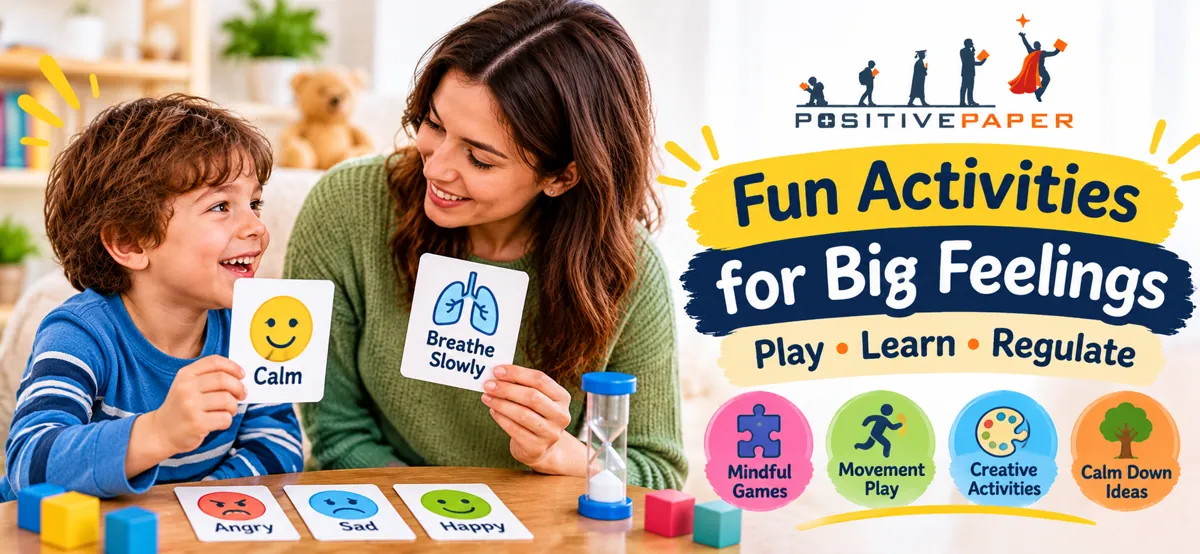
Naming feelings is a skill you build in calm moments, not only in storms. Use a feelings chart or emotion cards, point out characters’ feelings in books and shows (“how do you think she feels?”), and model it yourself out loud (“I’m feeling frustrated, so I’m going to take a breath”). The richer your child’s emotional vocabulary, the less they need to act a feeling out, because they can say it instead. Our guide on emotional regulation in kids goes deeper on building this over time.
Common emotion coaching mistakes
- Skipping straight to problem-solving. Jumping to the fix before the feeling is heard tells your child the emotion did not matter. Validate first.
- Validating the behaviour, not just the feeling. “You’re angry” is coaching. “It’s fine to hit because you’re angry” is not. Accept the feeling, limit the action.
- Coaching while you are flooded. You cannot guide a feeling you are drowning in yourself. Co-regulation comes first, which means you have to be the calm one.
- Faking it. Children read insincerity instantly. Real curiosity about their inner world beats a perfect script every time.
When emotion coaching is hard
The honest catch: emotion coaching asks you to stay calm and curious exactly when your child is at their most testing. That is only possible if you are regulated yourself, which is why co-regulation for kids starts with the adult. If staying steady in the heat of a meltdown is the part you struggle with, how to be a calm parent and how to stay calm when your child is screaming are the place to start, and tools like calm down strategies for kids help once the feeling is named.
Build the calm that emotion coaching runs on
Emotion coaching is one of the most powerful things you can do for your child’s long-term wellbeing, and it depends entirely on your own ability to stay regulated in the moment. Our 21 Days to Calmer Parenting ebook builds that steadiness day by day so you can coach instead of react. And when your own stress makes calm feel out of reach, 30-Minute Emotion Reset helps you lower your baseline first. Find all our Ebooks for Parents.
Frequently asked questions
What is emotion coaching in parenting?
Emotion coaching, developed by Dr. John Gottman, is treating your child’s emotions as chances to connect and teach rather than problems to stop. You validate the feeling, help name it, and guide the behaviour, working from the principle that all feelings are okay even when all behaviours are not.
What are the five steps of emotion coaching?
Notice the emotion early, see it as a chance to connect and teach, listen and validate the feeling, help your child name the emotion, and then set limits and problem-solve together. The feeling is always heard before the behaviour is guided.
Is emotion coaching the same as permissive parenting?
No. Emotion coaching accepts all feelings but still holds firm limits on behaviour. Permissive parenting drops the limits. The line “all feelings are okay, not all behaviours are okay” is exactly what separates them.
How do I teach my child to name their emotions?
Practise in calm moments with feelings charts or emotion cards, point out characters’ feelings in books and shows, and model naming your own feelings out loud. A bigger emotional vocabulary means your child can say a feeling instead of acting it out.
Does emotion coaching really work?
Research by John Gottman links emotion coaching to children who regulate their emotions better, recover from upset faster, and show stronger social and academic outcomes. The key is pairing genuine empathy with consistent limits, and staying calm enough yourself to coach.







 16Sep
 21Sep
 28Sep
 01Oct
 02Oct
 05Oct
 by