Kids learn best when they are playing, not being lectured. Emotional regulation games teach self-control, patience, and calm, and your child barely notices the lesson.
Here are the best games to play at home, mostly screen-free, grouped by the skill they build. No special kit needed.
What are emotional regulation games for kids?
Emotional regulation games are playful activities that build self-control, impulse control, and calm. They work because play lowers the pressure. A child can practise waiting, losing, and settling down in a game long before they can manage it in a real meltdown, and when one does happen, our calm down strategies for kids show you what to do in the moment.
Why games beat lectures
A game gives your child reps without the stress. They practise stopping, waiting, and handling frustration in a safe, fun setting. Lose a board game today, handle a real disappointment better next week. Play is rehearsal. The PBS Kids parenting team lists play among its top strategies for teaching kids self-regulation.
Impulse-control games (the stop-and-wait skill)
- Simon Says. Stop and listen before acting.
- Red Light, Green Light. Start and stop on command.
- Freeze Dance. Move, then freeze. A favourite for self-control.
- Jenga and turn-taking board games. Wait your turn, handle the wobble, cope with losing.
These build the brain’s brake pedal: impulse control.
Feelings games (name it to tame it)
- Feelings charades. Act out an emotion and guess it.
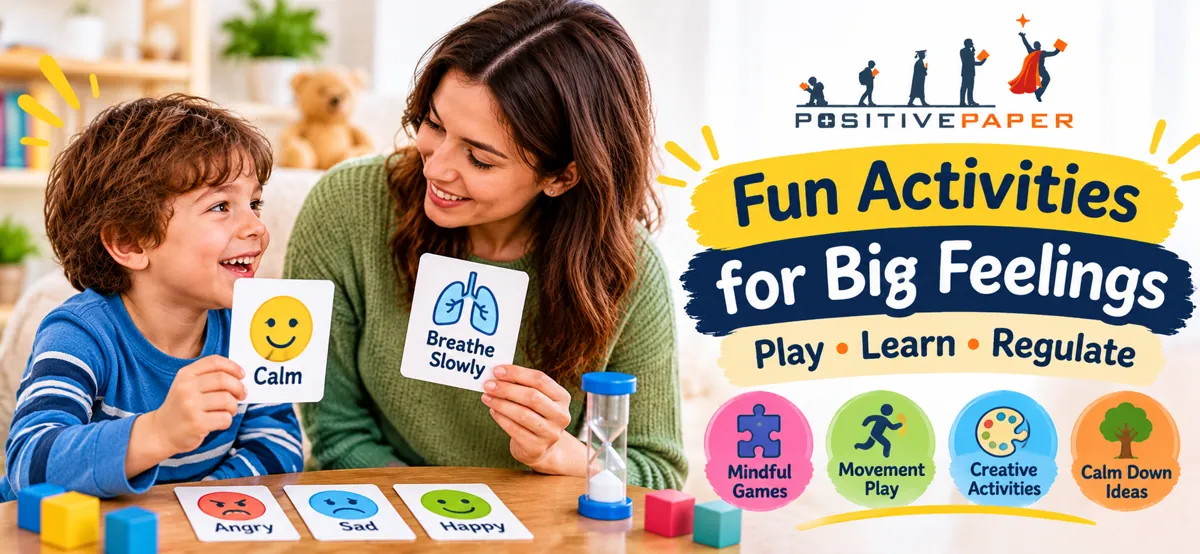
- Emotion bingo or feelings cards. Match the face to the feeling.
- “How would they feel?” Spot characters’ emotions in books and shows.
- Feeling matching games. Pair faces with situations.
Naming emotions is the foundation of managing them.
Breathing and calm-down games
- Pinwheel or bubbles. Blowing slows the breath on its own.
- Feather races. Breathe to move a feather across the table.
- Balloon belly. Breathe so a toy on the tummy rises and falls.
- Glitter jar watch. Shake it, then breathe while it settles.
Movement and body games
- Animal walks. Bear crawl and crab walk. Heavy work calms the body.
- Kids yoga poses. Slow, steady, grounding.
- Volcano. Crouch small, explode up, then melt down slowly.
A quick word on apps and screens
Some apps teach emotional regulation through biofeedback games. They can help, but keep them a small part of the mix. The real skill is built with people, in real play. Screen-free games win for one big reason: they include you.
How to play these games well
- Model losing gracefully yourself. It is the hardest half of the lesson.
- Keep it short and fun, never a drill.
- Name the skill after. “You waited your turn even though it was hard.”
- Play when calm, not mid-meltdown.
Where to go next
Games build the skill through play. For hands-on tools, see emotional regulation activities for kids. To calm a meltdown in the moment, read calm down strategies for kids. For the full picture, start with emotional regulation in kids.
To grow the confidence and self-control these games build, our Raising the Hero Within ebook (ages 8 to 12) and Raise an Unstoppable Child give you a step-by-step plan. Browse all our Ebooks for Parents.
This article is general parenting guidance, not medical advice.
Frequently asked questions
What games help with emotional regulation?
Impulse-control classics like Simon Says, Red Light Green Light, and Freeze Dance, plus feelings charades, breathing games like pinwheels and feather races, and turn-taking board games. Each builds a different piece: stopping, naming feelings, or calming the body.
How do games help kids regulate emotions?
Games let children practise waiting, losing, and calming down in a low-pressure, fun setting. That rehearsal builds the same brain skills they need in real life, so a game lost today becomes a disappointment handled better tomorrow.
What are self-control games for kids?
Self-control games ask a child to stop, wait, or hold still on cue, like Simon Says, Red Light Green Light, Freeze Dance, and Jenga. They strengthen impulse control, the brain’s ability to pause before reacting.
Are there apps for kids’ emotional regulation?
Yes, some apps use biofeedback games to teach calming skills. They can be a useful extra, but screen-free games with a parent build the skill more effectively, because real self-regulation is learned through connection and play.


 20Oct
 by