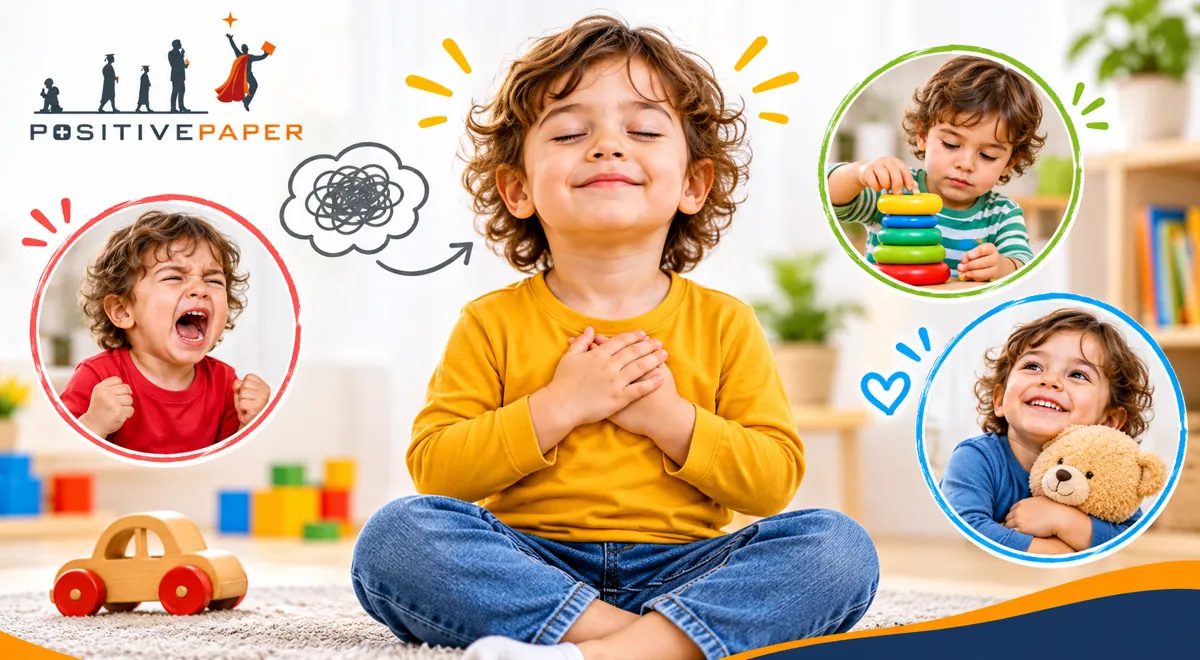
If you are waiting for your toddler to calm themselves down, stop waiting. They cannot yet. Self-regulation in toddlers is still years away, and expecting it is the fastest route to frustration for both of you.
Here is what toddlers can actually do, why co-regulation comes first, and how to help a 1 to 3 year old with big feelings.
Can toddlers self-regulate?
Not really, and that is completely normal. A toddler’s brain is nowhere near ready to manage big feelings alone. The thinking part that handles self-control is barely built. What toddlers do instead is co-regulate: they borrow calm from you. Real self-regulation develops slowly, over years, well into the school years and beyond. For a step-by-step plan to build that resilience and confidence along the way, see our Raise an Unstoppable Child ebook.
What is realistic by age
12 to 18 months
Almost no control. Feelings arrive at full volume. Your calm is everything.
18 months to 2 years
Tantrums peak. Language lags behind feelings, so frustration spills out as a meltdown. Still fully reliant on you.
2 to 3 years
The first tiny steps. They start to use a few feeling words and can sometimes be redirected. Expect wild inconsistency. A good day means nothing about tomorrow.
A toddler who melts down is not behind. They are a toddler.
Why co-regulation comes first
Co-regulation means a calm adult helps a child settle through presence, voice, and steadiness. For toddlers, it is the only regulation available. When you stay calm, their nervous system slowly syncs to yours. Michigan State University Extension explains the science in its guide on self-regulation for infants and toddlers. You cannot teach self-regulation by demanding it. You build it by lending yours, again and again.
How to help a toddler with big feelings
- Stay calm yourself. You are the thermostat for the room.
- Name the feeling in two or three words. “You are so mad.”
- Keep words few. A flooded toddler cannot process a sentence.
- Offer comfort. A hug, rocking, a soft voice.
- Keep routines predictable. Toddlers settle with sameness.
- Warn before transitions. “Two more minutes, then shoes.”
What not to expect
- Do not expect reasoning mid-tantrum. The thinking brain is offline.
- Do not punish the feeling. Limit the behaviour, not the emotion.
- Do not take it personally. A tantrum is a developmental stage, not defiance.
- Do not rush it. This is a years-long build, not a one-week fix.
When to check in with a professional
Toddler tantrums and big feelings are normal. Mention it to your doctor or health visitor if your child has no words by around two, loses skills they once had, rarely makes eye contact or connects, or if meltdowns are extreme and constant. Early input helps, and asking is never an overreaction. This article is general guidance, not medical advice.
Where to go next
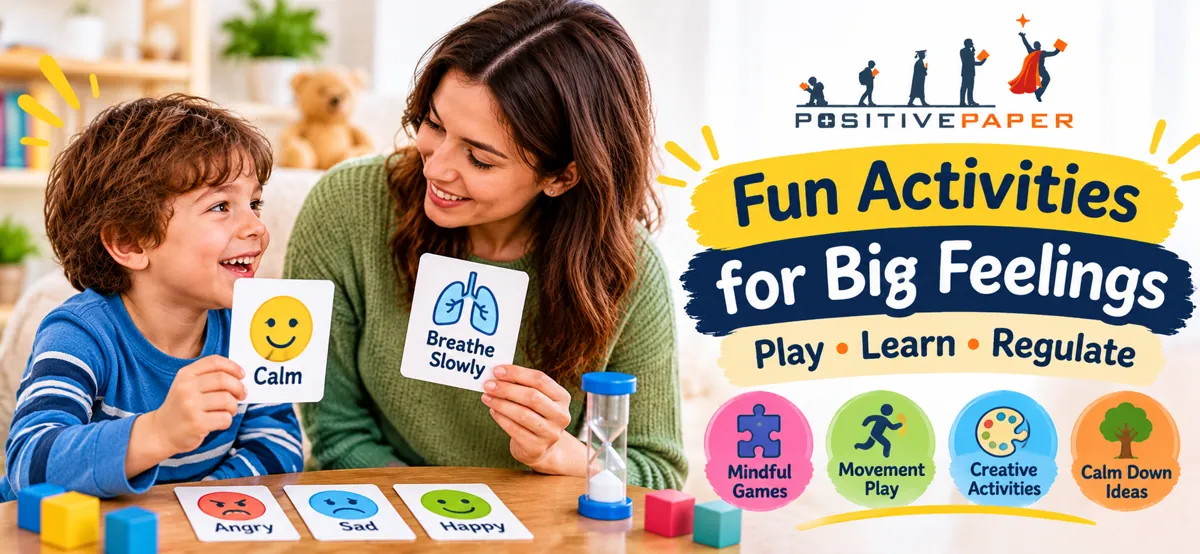
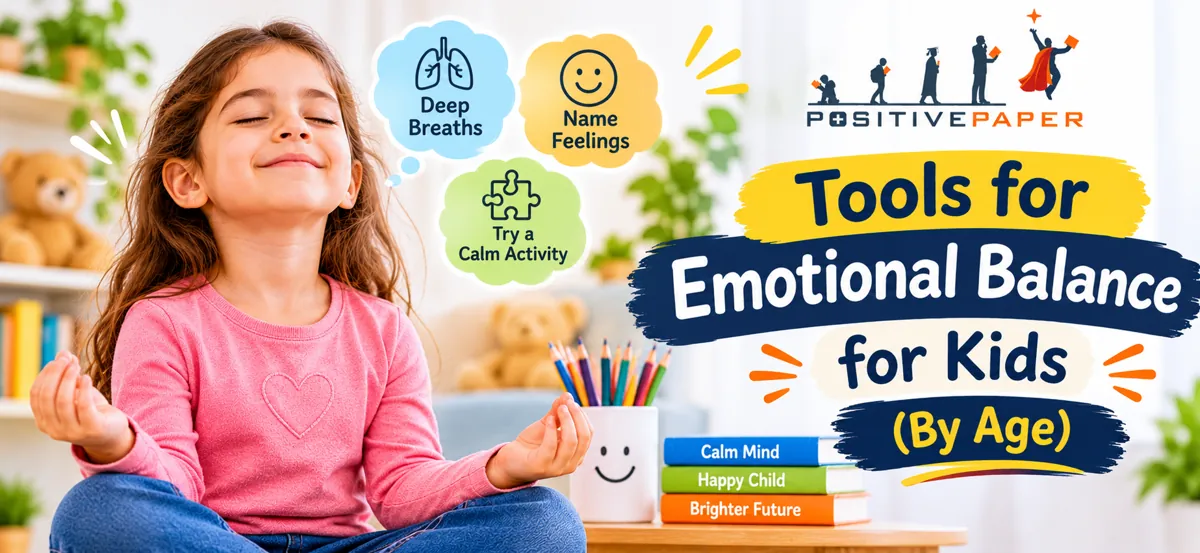
When the meltdown hits, calm down strategies for kids has the in-the-moment steps, and what to say instead of “calm down” gives you the words. For the full picture across every age, start with our guide to emotional regulation in kids.
Staying calm through toddler storms is a skill, and it is trainable. Our 21 Days to Calmer Parenting ebook builds it one day at a time, so you have more calm to lend. Browse all our Ebooks for Parents.
Frequently asked questions
Can toddlers self-regulate?
No, not on their own. A toddler’s brain is not developed enough to manage big feelings alone. They rely on co-regulation, borrowing calm from a steady adult. Self-regulation develops gradually over years, long after the toddler stage.
At what age can a child self-regulate?
It develops slowly. Toddlers rely fully on co-regulation, preschoolers take small steps with feeling words and simple tools, and school-age children manage more independently. The brain’s impulse-control centre is not mature until the mid-twenties, so expect big feelings for years.
How do you teach a 2-year-old to control their emotions?
You cannot teach control directly at this age. Instead, stay calm, name their feelings in a few words, keep routines predictable, and offer comfort. By co-regulating consistently, you slowly build the foundation for self-control later.
Why can’t my toddler calm down?
Because their nervous system is flooded and their brain cannot yet switch itself back to calm. Toddlers need a calm adult to help them settle. Lower the input, stay close and calm, and wait for the wave to pass.
What is co-regulation?
Co-regulation is when a calm adult helps a child settle through their steady presence, voice, and body. For toddlers it is the only form of regulation available, and it is how children slowly learn to self-regulate over time.


 20Oct
 by